
The 125-Question Checklist for Vetting Fund Managers w/ Scott Kidd
Listen
Show Notes
Scott Kidd runs a 125-question checklist before investing a dollar as an LP with any sponsor.
Scott Kidd is back on RealDealChat. He runs long-term development funds across medical office, multifamily, and hospitality, all while still working full time as a ship captain. He also invests as a limited partner himself, which means he vets deals from both sides of the table.
In this episode, Scott walks through the 125-question checklist he built after getting burned by a deal that fell through due to an inexperienced team. He explains why the operator matters more than the deal itself, how to spot misaligned incentives before you commit capital, and what equity multiple and yield on cost actually mean in practice. He also covers his current development pipeline, from medical office to a 250-key baseball themed hotel, and how he's using AI agents to manage his calendar and investor outreach without losing the personal relationships that actually close deals.
Key topics:
- The 125-question checklist for vetting sponsors and fund managers
- Why a strong team on a weak deal beats a weak team on a strong deal
- How to pick partners who complement your gaps instead of mirroring your strengths
- Equity multiple and yield on cost, explained simply
- Using AI agents for calendar and investor relationship management
Guest bio:
Scott Kidd runs long-term real estate development funds spanning medical office, multifamily, and hospitality assets, while working full time as a ship captain. He also invests actively as a limited partner.
Links:
Learn more about Scott's funds: https://investwithscottkidd.com
🔗 Build systems for your investing business: https://realdealcrew.com
#RealEstateInvesting #LimitedPartner #RealEstateFund #TripleNetLease #PassiveIncome #AccreditedInvestor #RealDealChat #CommercialRealEstate #MultifamilyInvesting #DevelopmentFund #RealEstateSyndication
Work With RealDealCrew
If you’re already closing deals but your intake, follow-up, or visibility feels inconsistent, here are two ways to go deeper:
Take the Deal Intake Assessment
See how resilient your current operation actually is.
→ https://assessment.realdealcrew.com
Book a Fit Call
If you want to explore what a fully system-driven deal flow looks like, let’s talk.
→ https://realdealcrew.com/book
LIKE • SHARE • JOIN • REVIEW
Transcript
You're betting on the jockey, not the horse. That's how today's guest evaluates every single deal before he puts in a dollar. In this episode, you'll learn the one hundred and twenty-five questions he asks before investing with any sponsor or fund manager. Why picking partners who complement your weaknesses beats picking people who think like you, and how he's using AI agents to manage his calendar and investors outreach without losing the personal touch that actually closes deals. Scott Kidd is back.
He runs long-term development funds, capital preservation plays, medical office, triple net lease, and multifamily while still working full time as a ship captain. He's also an LP himself, so he knows exactly what to look for from the other side of the table. find everything Scott's working on at investwith scotkid dot com. Links in the show notes. Let's get started. Scott kid joins me again and you can find what he can help you with by heading over to
invest with Scott kid.com. I'm going to have that as a clickable link in the show notes. I really appreciate you coming back again, Scott. It's great to catch up. Yeah, appreciate being here. We always have such great conversations. When you were on my podcast the other day, we went heavy into a lot of the AI stuff that you're going into.
And I think it's wide open as far as the potential there. I appreciate being here. Yeah, it's always great to catch up with you. You kind of have a unique story and how you kind of started into this. I'm not going to spend a ton of time on that. And I'm going to point everybody to the previous appearance because Scott, you're typically on a boat and a ship, right? Like dealing with a lot of...
And you're still doing that today? Yes, I'm still doing that today. It's something that I really love, enjoy doing. being on boats is not for everyone, but it's something that I'm really passionate about and that kind of fell into that ended up providing for myself and my family. It has been a great journey and it's led to a lot of other opportunities. Really a lot of great people. Well, one of the reasons I'm pointing this piece of it out, Scott, so early on, and I'm
going to probably hold a lot of this towards the middle of our of our conversation is because Being able to run a long-term fund like you do with the development projects that you do, there have had to be a lot of processes and people put in place in order to get that done and accomplished while you still essentially have a full-time job. Yes, and it's just like any other job, know, it's we have, you know, with building out all those things, you know, I'm part of a team. You know, it's not just me doing it.
You know, I'm mostly on the capital side with on the fun side and the, you know, raising capital and investor relations and dealing with, you know, onboarding people onto the fund and other associates and stuff involved with the fund. But you know, we have a whole development team that deals with a lot of the acquisitions and the underwriting and they have decades of experience doing that. And we have some senior people involved with the fund as well that have been doing that for decades as well. it's same thing that we do on the boat and in any job, you really build a great team and
you bring in more experienced. and more knowledgeable people to really help, you know, take out all the kinks and kind of give you that exponential growth that you're looking for because they've already done a lot of those things and you're not going to make those mistakes that they've possibly done, you know, way back when. So you really get a leg up on a lot of those things. that's what's enabled me is really just being involved with the right people. Well, it's always interesting.
Could you talk a little bit about how you went about making sure you had the right people, what questions, and maybe what networking you did in order to make sure that you're firing on all cylinders like that? Well, first of all, what I did is I made a lot of mistakes and sometimes not necessarily got involved with the with they weren't necessarily bad people or there were just we weren't in the right alignment and we weren't really there's some people that I'm involved with today that I met at a meetup and she and I are still partners today and we're looking at other
other properties as well, smaller multifamily properties and she has a property management company and she's great and we have aligned interests and we have other partners involved there. And there's been other deals that went through, you cause you don't know until you know, until you actually get involved with people, how they're going to act and react under stress. And it's the same thing in any job or career. Until you're actually in that, you really don't know how they're going to act and react.
what I've done is, and I've actually made a checklist of this, of 125 questions I ask potential sponsors and fund managers if you're looking to invest with them. Because I invest as a limited partner as well, which is called an LP as well. And I just kind of questions that I wrote down and a lot of it has to do with vetting the operator and the fund manager, because that's the most important person in that whole deal is because they're the operator. They're the one running it. They're the ones making all the decisions.
And if they're not as experienced operator or They have a bunch of other things going on or they've had bad deals in the past or you know, there there might not be as genuine of a person as try to expedite for people to to, you know, get past those red flags and see them as quick as possible. Because you could have a really great deal. But if you had to have a not so great operator, that deal can go bad. Or if there's somebody on their team is not so great either. that can be really have a big impact on the deal.
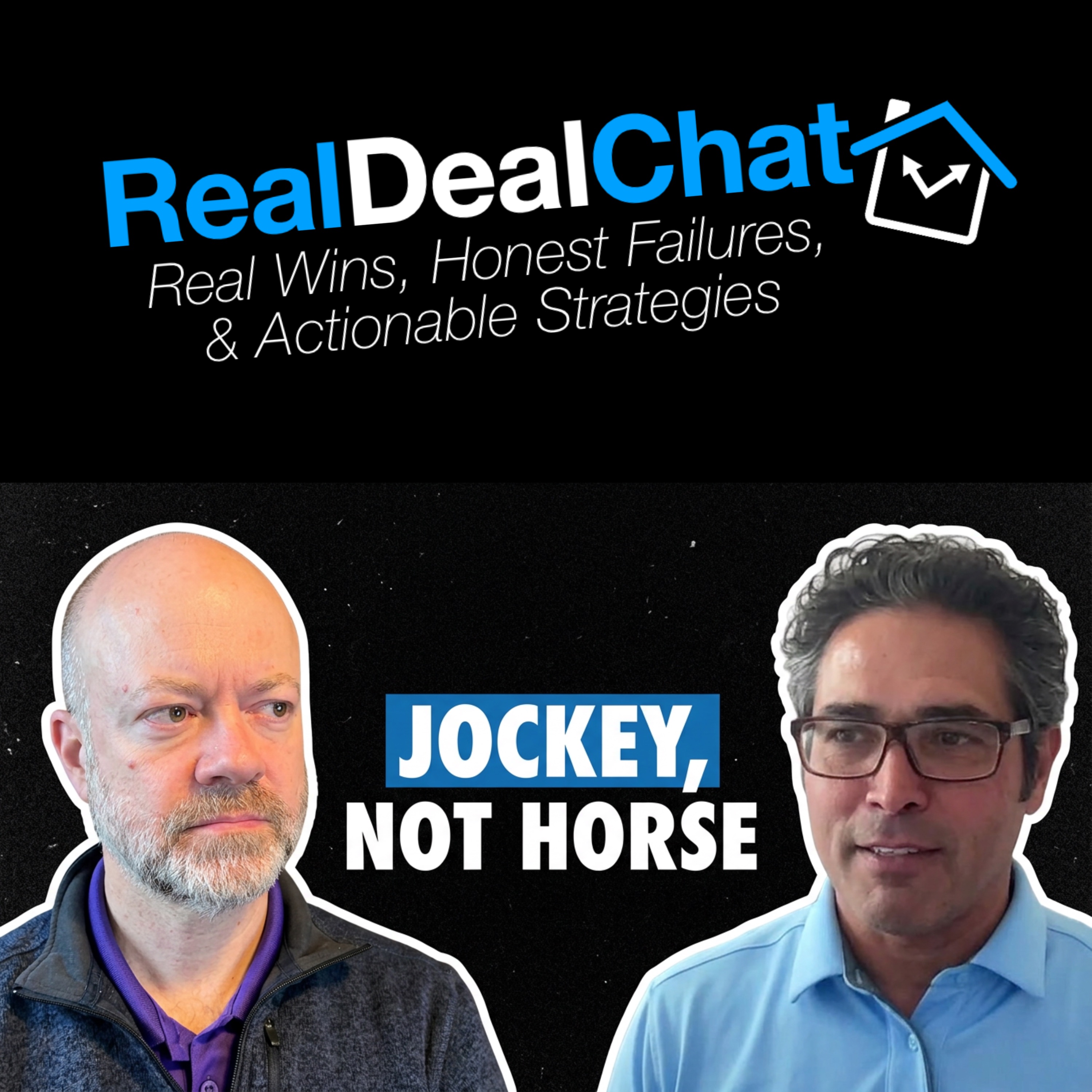
But if you have a not so great deal and a great team, I'll take that team any day because they're probably going to figure it out because one, they probably have more skin in the game and they have all the experience that, you know, if you put your hard earned dollars with them, they have their money in there too. So they have everything. that they're looking for to try to make that thing successful. So you're on the same team there. And I really would say you're betting on the jockey, not the horse.
Well, you mentioned something really important just a second ago regarding having your interests aligned. I find that that's actually harder to find than most people realize. A great example is property managers. I just haven't run into many property managers where our interests are aligned. They're trying to keep their business afloat. They're trying to build things out. It's just hard to find that synergy where they're actually looking after your best
interests, not just their own. That is a great point because especially in the multifamily space or even commercial property and stuff, the property management is very key in the overall success of the thing. if, you know, that's why you see a lot of these larger operations or more experienced operations, they have in-house property management where they can kind of control the property management either has funds in the deal or they have something, they have a vested interest.
on that property being successful. Whereas if they're third party, I don't want to say that their interests aren't aligned with yours, but potentially, like you said, they're trying to grow their business and doing what is good for their business. And that may not necessarily be aligned with all the things that you need for your property to be successful. You also mentioned that mistakes were made and those some of those lessons were hard learned.
Would you mind sharing a few of those? Uh, yes, just, um, you know, being on a less experienced team that, you know, that potentially didn't have as much experience as a, as a thought they did. And we had a deal that didn't necessarily go, didn't go through and. You know, we were all working very hard to make it happen, but it didn't go through, you know, for whatever reasons, you know, raising capital in the last couple of years has been. has been very tough, especially for multifamily and in the value add space, which is also
a lesson I learned also is that you really have to have a very strong team in the value add space that's very experienced in that, because there's a lot more that goes into it. Whereas now I'm more on the development side where I'm in with a really, really strong decade. decades long experience of a development team that really can see all these things that potentially we didn't see or overlook not by choice or just because we overlooked it. It was just because we didn't know we didn't know. And this particular team probably knows all those things.
And that's one lesson that I learned that... would really choose more wisely the team that I'm involved in. There was nothing wrong with the guys or nothing. None of them were bad guys, but together we just didn't make it. We worked very hard and we had a deal that didn't go through and it cost us a bit financially and it cost us a bit of time as well. Would that kind of be pointed to the concept of picking partners that compliment you not just because we have a tendency of Pooling together or becoming friends with similar
people like us instead of filling in those gaps Yes, I would say that's exactly right because you know those those gaps what I really tried to do is focus more nowadays on people that can bring something to the table that I can't do. You know, because you know, I'm good with people and stuff, but I'm not necessarily good at some of these systems and processes as like an engineer mindset that they are able to get into all those little details and and get and put all those little pieces together.
Whereas I'm more of a being a captain and on the boats and stuff. I've always been kind of a big picture guy. Like we need to take the boat from this point to that point in this amount of time. And we need this amount of crew. need this amount of every. So the details are very important, but the overall process is more of my mindset. So, you know, having other people that are, you know, development team that have decades of experience that can cost out all the construction.
You know, if they say this is what it costs, I can look at it, but I have probably little to no or no argument on that side to say to question some of these things. Although there do questions do come up with more more of a learning experience for me rather than, know, why are you doing it this way rather than arguing for sake of argument because they have there's decades of reasons why they're doing things a certain. Well, you know, you talk about your captain experience that that has had to be pretty impactful and a leadership role in your current positions as well.
I know it's not a complete perfect match over, but having that level of, know, whether it's delegation or finding the right team members, mean, there's probably a lot to be learned from from your day job. Well, there is a lot and I know what it takes to build a good team. And that's one of the things that I have excelled at is building a good team. And with that, you know, on the team that I'm on now, I'm not necessarily the senior, I'm kind of a junior guy. So I know what it takes to be a good team member from building all those teams.
So I focus on what I can do by creating value for the team. Like, you know, because I know this is my skill set being with people. So I focus on bringing the right people to the fund, the right investors, the right capital, the right co-GPs, the right partners that will help enhance the deal or get us further along in bringing capital or what have you. potentially other general partners that... want to be involved with us because we want to scale.
we're always looking for great partners with alignment with us. And that's something that I've learned. also, that being said, being able to be a good team member, I think, is probably the best thing that I can bring to this group at this time. That's really important. Value for the team and how to be a good team member. If somebody was listening to this and was considering these type of opportunities or would like to pursue these type of opportunities, what advice would you give them in order to
become a good team member like that? Well, always lead with value. Look at what you can do and what you can bring. Don't start out thinking what you can get out of the deal and the team because it probably won't go anywhere and it'll probably just be transactional. Look at like what the long-term goal of the team is and look at what you can bring to help move that along. Take a hard look at what your skill sets are.
Like if you're really good at underwriting or really good at, you know, finance, you know, maybe you can help find the mortgage or the debt or something like that and maybe go through those things or, you know, help maybe put the deal together in a certain way. Like, you know, do some kind of boots on the ground stuff also, you know, like, hey, we're looking in the Dallas Fort Worth area. you know, hey, do a lot of research on what the best zip codes are for us to do the next development deal. You know, if you're, if you're good at that kind of thing, if you're, or if you're good
at, marketing or sales, you know, maybe you should, you know, reach out and speak to a lot of the brokers and try to find the next deal or the next land or, know, just see what your skill set is and see where you can bring the value for the team. This is something that we're going to sit on here for just a moment because what what Scott is really saying too is it's great to bring the value, but don't bring the homework. I've run a number of times. I've run into a few people that you know they'll they'll approach somebody and ask what can I do for you or whatever you know it's it lead with the value you can bring don't
Don't ask such open-ended type questions. Does that make sense, Scott? Yeah, that you know, one thing that I've always said on the boats is especially when you're dealing dealing with billionaire type clients or high high level entrepreneurs and stuff, always provide the solution. Don't provide the problem. Like you're saying, don't bring the homework. Bring bring the solution.
Bring, you know. If there is an issue like there's only a certain amount of property or something, solve that problem and say, hey, we can let's try and maybe look at it this way. And, you know, because I've tried this, this and this because a lot of times on the boats I've done like I always try to instill that in all the crew members because, you know, a lot of these billionaire guys, they have people coming with problems all day, every day and all their businesses. You don't want to be one of a hundred.
You want to be the one guy that came and solved the problem. Say, hey, I tried this, this and this, but this worked. And then that's a different conversation. And then it's also you kind of shows that you cared enough to go through all that hardship and solve the problem and then shows that you're able to solve the problem. So that's infinitely more value than just bringing the homework. you Well, Scott, I just want to remind everybody we are talking to Scott Kidd.
You can learn more by heading over to invest with scottkidd.com. Click up a link in the show notes if you found some value what we're chatting about so far. Do us a favor share this with one of your friends. If you're watching us on YouTube, give us a like and subscribe. Let's talk about what you're currently working on you. You got long term funds. Do you typically work with accredited events investors at this point?
generally that's mostly what it is and, we're looking, gearing more towards a lot of, higher and ultra higher net worth individuals. Cause our, most of our stuff is development. So people have to be okay with, you know, no returns for during the construction period, you know, acquiring the land and stuff like that. So it's, it's more of a capital preservation. Cause it's generally what we look for is a. you know, the equity multiple and the yield on cost, is the equity multiple is usually
five years, 2X and then yield on cost is 7 % or better. And that's generally what we look for. And the yield on cost is just the yield on what we've put in there, just in a simple, simple terms. And the equity multiple is just, you know, what they put in. That's what they get and get back in the next. five years and that's fairly, that's our mantra with everything we're working on, whether it be medical office, hospitality or multifamily and residential because it's kind of
something that a lot of these guys, that's what they're kind of looking for and that makes sense for them. All the other metrics kind of work out at that point. So that's interesting. With this concept of capital preservation and the delayed gratification of the returns, I'm sure that there's a lot of conversation setting the stage, education, and communication associated with this so that everybody's on the same page. Yes, there definitely is.
There's a lot of education and, you know, a lot of people that are accredited a lot of times, especially like if they've had a exit in a business or something like that, generally just, you know, sometimes they just want to put the money into something and have it grow over time, you know, and it's not necessarily for the average retail investor, but a lot of them like that because they like to learn about how the whole development. plan works out, which I find it pretty interesting myself because it's, you know, you're building things that people need and that we all need, you know, because the growth is
there and, you know, we need medical offices, we need more housing, you know, we need more hotels. You know, it's just the demand is pretty high for a lot of this stuff. So I find it pretty interesting that we're actually filling a need. Well, what need are you particularly filling in right now? Like, what are your development projects that are currently active or on the horizon? Well, we have with our medical offices, seven of them are being sold in a portfolio sale and we're always looking for more physicians and surgical partners to partner with because
the key with that is the niche with that is that they're close to a hospital network and we show the surgical partners how they can. invest in the real estate because they have to pay rent for their business anywhere, whether it's their medical office space or in the hospital. And hospitals have grown over time and be very admin intensive and very regulatory. Whereas these are within a couple of miles where the surgeon can have their medical office there and the operating theater there as well. So they stay in the same building.
And because they're less administrative intensive. think I said that right, but a little bit of a tongue twister, but it the costs are less and the surgeons get paid more and it's they also get the offset from the real estate asset. They're investing in their business and in the real estate. So they get, you know, premium on on the real estate and they own their own building because the business has to pay rent somewhere.
And with that, also offers a more cost effective option for the patients and the insurance as well, because it's less overhead and everything for them. And that's what our main, one of our three focuses are. But those are being sold and those are in Kansas City. And we're looking for more surgical partners in Dallas and in Florida as well. We also have our multifamily projects. have two in Dallas. A 98 unit that's probably going to be finished, I think, end of June, end of July,
somewhere in that. the demand is pretty high because it's 98 units and 11,000 square feet of commercial space. And we've started the pre-leasing process a little while back. And as of last week, I think we have over 135 applications for pre-lease and there's 98 units. So chances are the demand is pretty high there. And we have another project about 20 minutes away that we just closed on the land.
It's probably, it was slated to be 120 units, but I think it's going to be 180 units now, cause it makes more sense there. And it'll also be 50, 50 town homes that are built to sell and So we have those going and we're currently, we're raising capital for that and we have a few million dollars left on that one. It's pretty close, I think there's about three million dollars left on that one to raise. And then we have our hospitality project in Chesterfield, which is the St. Louis area.
It's probably a 250 key hotel. It'll be a baseball themed hotel that is, we're signing an agreement with. baseball equipment manufacturer and that will be part of it will be a baseball themed Marriott tribute or a higher product which would be luxury plus 40 townhomes and that's we're just putting the fund together for that one and that raise will be quite a bit higher because I think the total project cost for the two of those is probably going to be close to 200 million. Well, I hope you knock that one out of the park.
I couldn't help myself. I knew you couldn't help it. No, no, that was perfect. Well played. Well, one of the asset classes, a couple of things that stick out here is that first off the the medical buildings, I don't think that's an asset class a lot of people even consider, but I can definitely see the need for stuff like that. Yeah, it's a very, it's a very popular thing.
And I think the demand is only going to increase because, you know, the for the the appetite for the average investor and these are smaller assets compared to the other ones that we're doing. And these are, you know, a lot of retail investors like these because they're all triple net leases, which if you don't know what a triple net lease is for listeners, they probably do. But It's all the expenses are pretty much paid by the tenant.
basically what the landlord is, depending on how the lease is written, is responsible for the common areas, the roof, the exterior. And what we do is we provide, we build the shell, and then the tenant gets an allowance, they build out the inside, and they're very stable. They don't produce the higher, you know, the high pops or anything like that. they are very stable and they're very consistent. you know, they're steady as as she goes. And it's a 15, 11 to 15 year lease.
And there's probably one or two residents or one or two businesses in there. So, you know, with an escalator clause, which means it goes up every few years. So. you you're buying a pretty stable asset. And chances are, even after the 15 years is up, that company's probably not going to move. Well, that's what I'm thinking too, is that first off, you've got some professionals in there that are pretty steady income, you know, and when they establish a place, the likelihood of them moving for their clients or patients, it's pretty unlikely they're
going to be moving anywhere anytime soon. Yeah, it's, it's, it's, you know, and that's with business in general, with, with a lot of these, business leases and commercial real estate. If you own a business, even if you're, you know, you have a plumbing business or a carpentry business, you're probably not going to move. You don't want to move it. So it could be detrimental for the business, especially with a surgical center. You know, if it's there when we can, you know, moving is just probably a logistic
logistical nightmare. And, you know, people like consistency, especially with those. these these particular ones are even niche down further because they're ambulatory surgical centers and they're orthopedic centers. So you're looking at, you know, a lot of, you know, orthopedics is, you know, bones and bone surgery and stuff like that. So that's an even more niche thing. So they're probably not going to move ever.
So, you know, one of the things that also stands out is that you are, I don't want to call it all over the place, but you got your hands in quite a few different asset classes here, whether it's this medical buildings, the twin homes, the like, you must have some serious operations or systems in place to handle this type of, of work. Yeah, like I said, the art development team has been doing it for, you know, 35, 40 years and they're, you know, they've built in the billions as construction and that and my, mostly on the capital side and I focus on building out the fund and getting that structure in place, but it is a lot.
with the education aspect, because the people that you're speaking to generally about the medical office may not necessarily be into the multifamily or the hospitality. So it's three separate conversations. it can be a little bit, you know, a little bit all over the place, especially, you know, a lot of people are like, you know, well, you have these three different classes, like which one is, you know, which one is the best? It's like, well, you'll You have to figure out which, you know, that's a different conversation you need to have
with them. Like, where are you at in your life? Do you want long-term preservation or do you want, do you want, you know, a little shorter timeline? You know, where, know, do your kids in school? There's where you really have to get to know people to kind of see where they are and meet them where they are, you know, because the medical offices may not be for you know, someone that's just starting a family or something like that.
may, you know, maybe more for someone that's in that capital preservation mode. oh show and we talked about AI. But what you're talking about here right now is what AI is never going to be able to replace is that human connection, building those relationships and having a deep understanding of where a person is at. Yeah, and I think we were discussing this also, just that how much more valuable the in-person and the personal connections will become, these in-person podcasts, these
virtual podcasts, and then the in-person ones are just, you those kind of connections are just going to become more and more valuable as we get further into this tech and AI world. Well, how are you leveraging these new tools in your business? Well, I have started playing around with some of these AI agents and things like that, just to really like I have some going through my email and optimizing for the day my calendar like, for judging from yesterday and today going through my calendar, what are the most important people I need to connect with today and go from there and then. You know, have a weekly thing like what was the most, and then looking over what was the
most successful and what can I double down on the next week. I'm learning, I'm learning as much as it is. I'm probably learning more than it is on what I need to optimize, you know, and I'm looking at potentially having it go through my contact list and seeing, okay, we have, you know, putting in the timeline, say for instance, that we have a our medical office needs to, we need to raise X amount of dollars in the closing is at this time, go through my contact list, who are the people I need to reach out to and follow up with that would be the most advantageous for them to speak to them about what
we're working on. Sure. Yeah, it's kind of crazy what you can do with some of these tools, just right out of the out of the what are you kind of favoring one AI over another at the moment? Well, I've been using through a friend of mine, Adam, that used to be in Raze Masters, SimLink, is, well, Sim Theory actually, but he's shown me how to set up on SimLink, which you can actually have a dedicated smaller computer, which I haven't gotten that advanced yet, where it can be doing these multiple tasks on this one node at a time, and then you
can have multiple nodes. collaborating. I haven't, I'm one task at a time is because if I start doing that, I might just go all over the place and, and I might build something cool, but it might take me forever. Yeah. working before you start letting this thing evolve into something bigger. Because then then you're trying to swat a number of flies and it's never gonna it's never gonna happen.
Yeah, and it's it's that old saying, build one bridge at a time, because if you if you try to build too many at one time, you end up having a bunch of bridges. You know, it just ends up being that way. I and I think we talked about this last time or not. We were talking on that about talking about after the call, because I know that I've done that just because some of these things are so cool. I just started nerding out about it and then. you know, next thing you know, it's like, I've done these 20 things and none of them are
done. And one of them would have been cool. Yeah. Right, right. Yeah, that's the rabbit hole people fall into right now. Well, Scott, this is always such a great conversation. Before we jump into the rapid fire and start closing out this episode, is there anything else we should have tried to hit on?
No, I can't think of anything. mean, we covered a aside from solving the world's problems we did, we did pretty good. Yeah, only if. Well, if you're ready, Scott will jump into the rapid fire and close out this episode. But to remind everybody again, it is invest with Scott kid.com. That's going to be a clickable link in the show notes. But if you're ready, Scott, ready for the rapid fire? What lie do real estate investors often tell themselves?
What lie the real estate investors often tell themselves? Hey, it's only this thing and we'll close it all out and this is gonna be the greatest. Yeah. Yeah. If you could go back in time and give your younger self a piece of advice, what would it be? Fail faster. Go for it.
That's interesting answer. From experience? Yeah, because there were a lot of things when I was younger that I kind of hesitated on or didn't do because, know, but if I would have learned quicker at a younger age, I think it would have helped me just trying more things faster. Do you have a book recommendation or what are you reading right now? I'm reading right now, Thou Shall Prosper by Daniel Lapine. I think it's the Rabbi Daniel Lapine or Lapin.
I'm not sure how you say his last name, but really great book on just, it's written by a rabbi and it's. the Jewish faith, according to the Torah, their whole idea about success. it goes into overall mindset when it comes to money and things, because there's a lot of very successful Jewish people all over the world, not necessarily in just finance and stuff, you know, artisans, musicians and stuff like that. it kind of it kind of goes into why and how that is, is because they have a big sense of community and
They look at having a transaction with someone. This is my takeaway anyway, that having a transaction and providing something for someone and getting money in exchange for that, they think it's a good thing. And I don't have a problem with that either. But, you know, a lot of times when I was a kid, I heard things like money is the root of all evil. you know, anyone that made a lot of money there, you know, they did something to. bad to somebody to get that and you know, and a lot of those things I just have found
throughout my life not necessarily to be true. Yeah. then finally, what single tool or process have you implemented that has had the biggest time saving impact? I'm saving impact, focusing on my calendar, like the one behind me. Yeah, do you do? Do you are you one of those time blocking people? I try, but sometimes I go down that rabbit hole and that calendar fades to black.
um I'm focusing on being better because this big, for lack of better word, big ass calendar in the background, that Jesse Itzer calendar, I started doing this several years ago. focusing on the things that are important to me first, like my family and stuff, schedule all that stuff first, then schedule all the business stuff around that. It's been an overwhelming thing that's made a big difference in my life because somebody said something when my kids were young, was, you know, I was working hard doing a lot of different things and they told me that, hey, you know,
The only people that are going to remember that you worked late are your kids. not your boss, not your partners, not the person that you sold whatever to is gonna be your kid. So I took that to heart because you're not gonna get that time back. Well, I don't think I can end it any better than that. Again, Scott kid, you can learn more with it at invest with scott kid.com clickable link in the show notes, but hope you'll consider coming back again, Scott, maybe this time a little sooner.
yeah, I definitely will. I always enjoy our conversations. It's always some, we'll get into some good, interesting topics. I appreciate being here.
Work With RealDealCrew
If you're closing deals but your intake, follow-up, or visibility feels inconsistent — start here.